Showing posts with label Bletchley Park. Show all posts

Tuesday, 21 February 2017

Milton Keynes History

Last month the city of Milton Keynes celebrated its 50th birthday - but the area has much of historical interest. It is overlooked by the iron-age fort of Danesborough, includes the Roman settlement of Magiovinium, a Roman villa, the historic Watling Street coaching town of Stony Stratford, Bletchley Park and transport routes from across the ages (Watling Street, Grand Union Canal, Railway, M1). It includes a number of ancient villages and the historic towns of Bletchley, Stony Stratford, Wolverton and Newport Pagnell.

In this and subsequent posts, I will share something of that history. There is an excellent map called "Milton Keynes Heritage". I believe that it may still be available from the Visitor Information Centre in Centre:MK [the huge indoor shopping centre]


I've always believed that to understand the history of an area, it is necessary to study its geography. Milton Keynes is built on a low plateau, crossed by three rivers.

The biggest river forms the Northern boundary of the city itself, then crosses through some of the rural parts and through the town of Newport Pagnell. The Great Ouse runs 143 miles from its sources in Northamptonshire (near the village of Syresham), through Brackley, Buckingham, Milton Keynes, Olney, Bedford, St Neots, Huntingdon, St Ives and Kings Lynn before entering the Wash. The Treaty of Alfred and Guthrum - which settled the border between the Anglo-Saxon kingdoms and Danelaw ran along the Great Ouse between Stony Stratford and Bedford.

The second river is the Ouzel (also known elsewhere and in other eras as the Lovat). It rises not far from Whipsnade Zoo - and flows through Leighton Buzzard and through the city close to the site of Magiovinium; past the Open University, meeting the Great Ouse in Newport Pagnell.

The third 'river' is a brook - but it has carved out a pleasant valley which is partly used by the railway. Loughton Brook rises a little outside the City to its south west. It flows through the estates of Tattenhoe Park, Tattenhoe, Emerson Valley, and Furzton - where it feeds Furzton Lake, past the Milton Keynes (National) Bowl, Knowlhill (where the Teardrop lakes are), Loughton, past Bradwell Abbey and close to the Roman Villa in Bancroft, eventually meeting the Great Ouse in New Bradwell.

Monday, 23 January 2017

Milton Keynes 50 today!

Happy Birthday to a great city. Created 50 years ago today by ministerial order, the city has transformed this area of North Buckinghamshire. It now has a population of over a quarter of a million citizens. We moved here in 2009 - and wouldn't want to live anywhere else. We live close to Furzton Lake - a carefully planned artificial balancing lake - which is now home to a variety of birds. I love being able to walk from my home to Milton Keynes Central station through two miles of parkland. (Despite its image as a concrete city, it has millions of trees and a redway grid offering a healthy alternative to its road & roundabouts grid)

It also has a fascinating history. One of the advantages of a planned development in the 1960s onwards - is that archaeologists went in before building began. Roman villas (& a fine mosaic now on permanent display in the shopping centre); bronze and Iron Age settlements & a number of treasure hoards have been found. I live half a kilometre from Watling Street, a hundred metres from an Iron Age settlement and a few doors down from where a gold Roman brooch was discovered. Bletchley Park is a 25 minute walk away - and Alan Turing stayed in a then-pub in the estate neighbouring ours.

In this blog I will be writing about that history - there are already a number of such posts (do take a look) - but I'm working my way through the many archaeological reports that have been published - and other histories that have been published.

And if you haven't visited MK - it's worth a visit.  Explore The redways (The red coloured paths wide enough for cyclists and pedestrians to peacefully co-exist - that go through the countryside in the city). Visit Bletchley Park, or our Roman villa in Bancroft. Walk through Stony Stratford past the building in which Richard III took his nephew into "protective custody", or Newport Pagnell - a key to the English Civil War of the 1640s (or Shenley Toot - or the ruins of Wolverton Castle - both built during the civil war after King Stephen seized the throne)

Friday, 20 May 2016

Milton Keynes History

Does Milton Keynes have any history? The general impression of Britain's newest city is that its "history" only covers the last 50 years. In fact, nothing could be further from the truth. As well as making an excellent base for discovering key sites in British History (fast rail link to London - and the slower trains stop at Berkhamsted : almost the mid-point between Oxford and Cambridge ; Close to Buckingham and Aylesbury) - MK has plenty to see within its boundaries.

Now known across the world - Milton Keynes is where Bletchley Park is to be found. Perhaps you've seen the film "The Imitation Game"? Some of it was filmed there - but if you visit you can see Alan Turing's office - and the mansion itself.


The Roman road which we now know as "Watling Street" runs through the city. In fact it runs at the end of Furzton - and through the town of Stony Stratford. There are the remains of a large Roman villa in the estate of Bancroft (which I love visiting) - not very far from the concrete cows. Other villas have been unearthed as archaeologists gained the opportunity to discover the city's ancient history before the developments went ahead. I live just yards from an iron age settlement and bronze age; iron age; Roman; and medieval remains have been uncovered across the city.


When Edward IV died, the crown was inherited by his young son. It was in Stony Stratford that he was met by his uncle, who was to become Richard III, and taken into "protective custody". A sign on a house commemorates where
 they met. Stony itself is full of historic buildings.

The area played a key role in the transport history of England - and as well as a Roman road; there is the canal and the railway. Wolverton works was an important place for building and repairing railway stock.

The villages that sat in the countryside which was used for the new city remain - though are hidden from the hidden roads. Loughton; Milton Keynes (the original village); Shenley Brook End and Shenley Church are just some of the delights to be discovered.

Newport Pagnell played an important role in the English Civil War of the Seventeenth Century.

Over this summer I will be revisiting many of these places - and along with book research - will have lots of materials to post on this blog.


Sunday, 6 September 2015

Gordon Welchman

I live about a mile from Bletchley Park - and I am both a big fan of the place (and the tremendous work that has been done there to save, then turn it into a first class place to visit (I thought of using the term - 'museum', which it is - but that word has connotations of dry sterile exhibits - and Bletchley Park is warm, alive and engaging)) and a regular visitor. I'm reading through the many books that have been published about BP - some by the key players themselves.

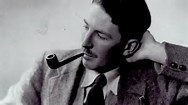
Tomorrow evening (Monday 7th September), BBC2 are broadcasting - "Bletchley Park: Code-Breaking's Forgotten Genius". It's not about Alan Turing - who, we have come to understand in recent years - played a, once over-looked, key role in code-breaking, Mathematics and the development of computing. Instead it is about another of the fascinating characters who were brought together in Bletchley Park - Gordon Welchman.


Welchman too was a mathematician - and in 1950 he wrote a book, "Introduction to Algebraic Geometry". The Oxford Dictionary of National Biography (in a piece written by the son of the Head of BP)  recognises that "he made a SIGNIFICANT contribution to the solving of the Enigma machine cipher...he instinctively grasped a whole range of problems, possibilities, and solutions which included two vital mathematical constructs as well as a concept of the total process required, from the intercepted German ciphered traffic to passing on significant intelligence implications to the commanders in the field...the task of converting the original breakthrough into an efficient user of the material was one for which Welchman should receive much of the credit"

While Turing headed up Hut 8 (which dealt with naval codebreaking), Welchman headed up Hut 6 (army and air force codebreaking) .

I'm looking forward to the programme - I hope you do too (and tell your friends)

There are some good books available -

By Welchman himself -


and